
PI - John S. Peters, College of Charleston, Department of Biology
Co-PI - Brian Scholtens, College of Charleston, Department of Biology


|
Problem-Based
Learning & Scientific Inquiry in Introductory Biology
PI - John S. Peters, College of Charleston, Department of Biology Co-PI - Brian Scholtens, College of Charleston, Department of Biology |
|

Project
Abstract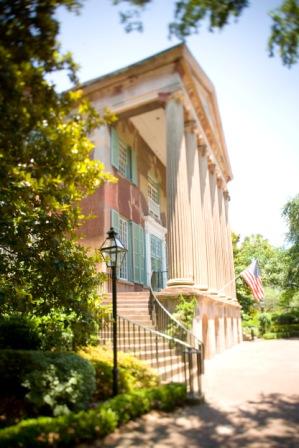 Randolf Hall |
NSF DUE 0410720 - This project utilizes Problem-Based Learning (PBL) and inquiry-based laboratories to teach the core concepts of biology from the perspective of civically engaging issues or problems. Our goal is to facilitate civic biological literacy in college non-science majors’ biology students by utilizing PBL problems of timely importance and/or local interest to our students in order to provide a context and reason for learning. Related inquiry-based labs are designed to engage students in the process of scientific discovery in the context of understanding real world problems. Biology and science education undergraduates and graduate students are involved in the development and implementation of the curriculum as teaching assistants and peer facilitators. The evaluative thrust of the project is to assess how PBL/inquiry-based vs. traditional content-driven strategies affect the development of biological literacy by examining students’ pre and post course views about various aspects of science-technology-society. The SENCER Student Assessment of Learning Gains (SALG) is also being used to assess students’ views about how the different approaches affected their learning. Additionally materials to facilitate the training and support of college faculty and undergraduate and graduate teaching assistants are being developed. Dissemination of the methods and results of this project are on-going and will encourage and assist with reforms in other courses and at other institutions. |
PBL
Instructor
Resources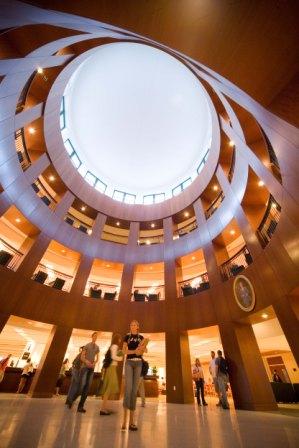 Addlestone Library |
National Center for Case Study Teaching - SUNY Buffalo recently transferred its case study collection and training resources to the National Science Teacher Association (NSTA) site. Unlimited access to all the case studies, teaching notes, keys and training resources requires a $25 annual subscription fee. Cases will also be available for free on a per monthly basis to the general public on the following terms: 1) anonymous users who will be able to download one free case per month, for a total of 12 free cases a year; 2) registered users will be able to download two free cases a month, for a total of 24 cases a year. To access any of the four featured free cases, you will need to register for a FREE guest NSTA membership, though access the case teaching notes and answer keys will require that you register and pay the $25 annual subscription fee. University of Delaware's Institute for Transforming University Education. The PBL Clearinghouse has PBL problems, and teaching suggestions and resources for problems in many areas of science. This site requires free registration. HHMI Biointeractive - Real science, real stories, and real data to engage students in exploring the living world. Vision & Change in Undergraduate Biology Education Working Group Resources Addressing Faculty Questions about Student-Centered Learning - Assembled by Jeff Froyd and Nancy Simpson - Texas A&M University MERLOT Biology Portal - A clearinghouse for a wealth of resources for teaching biology. Science Education Research Center at Carlton College (SERC) - Another clearinghouse of resources for science education for K-12 and undergraduate faculty. Teaching Issues and Experiments in Ecology (TIEE) - a peer reviewed publication of ecological educational materials by the Ecological Society of America RubiStar - A neat little web site which helps teachers create grading rubrics for writing assignments. Rubrics are a scoring tool that lists the criteria for a piece of student work. A good rubric will list the things the student must have included to receive a certain score or rating. Rubrics help the student figure out how their project will be evaluated, and provide a way for teachers to standardize grading practice. I've also found that good rubrics make the process of grading writing assignments easier and faster. |
Inquiry-based Learning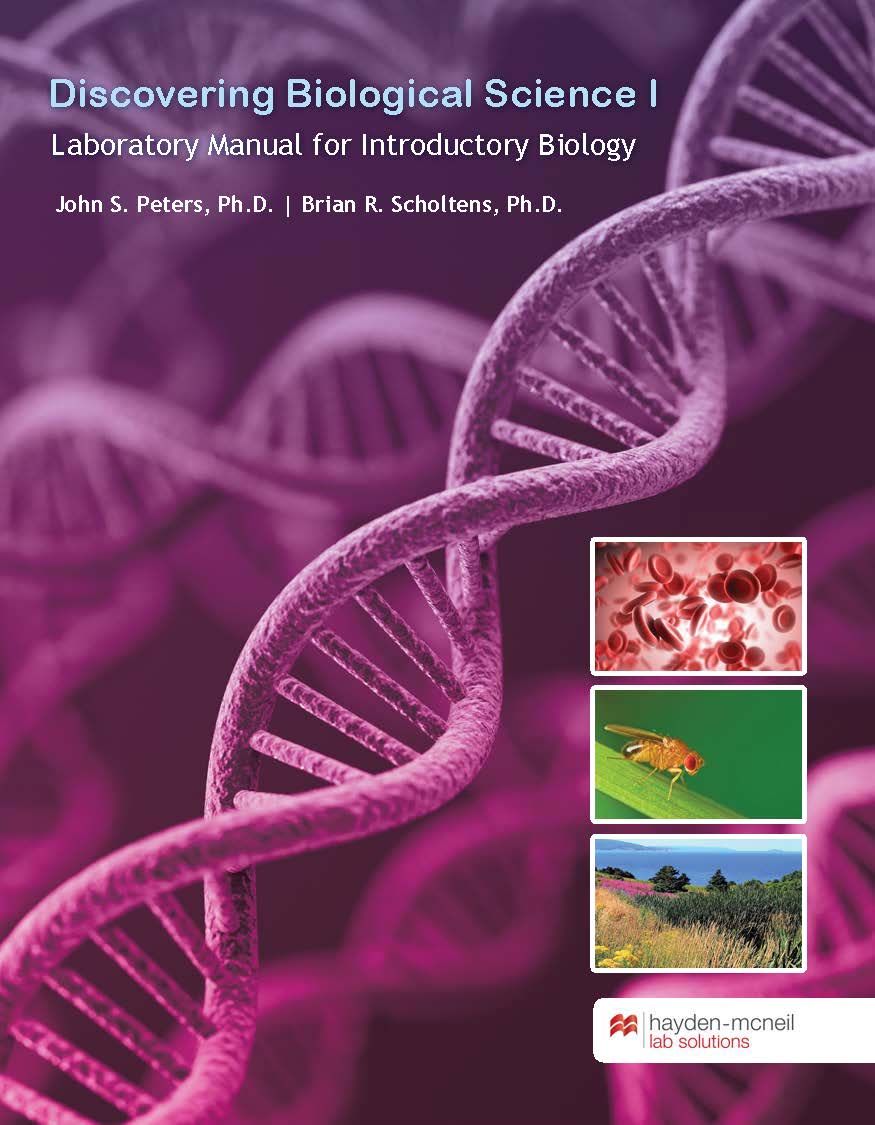 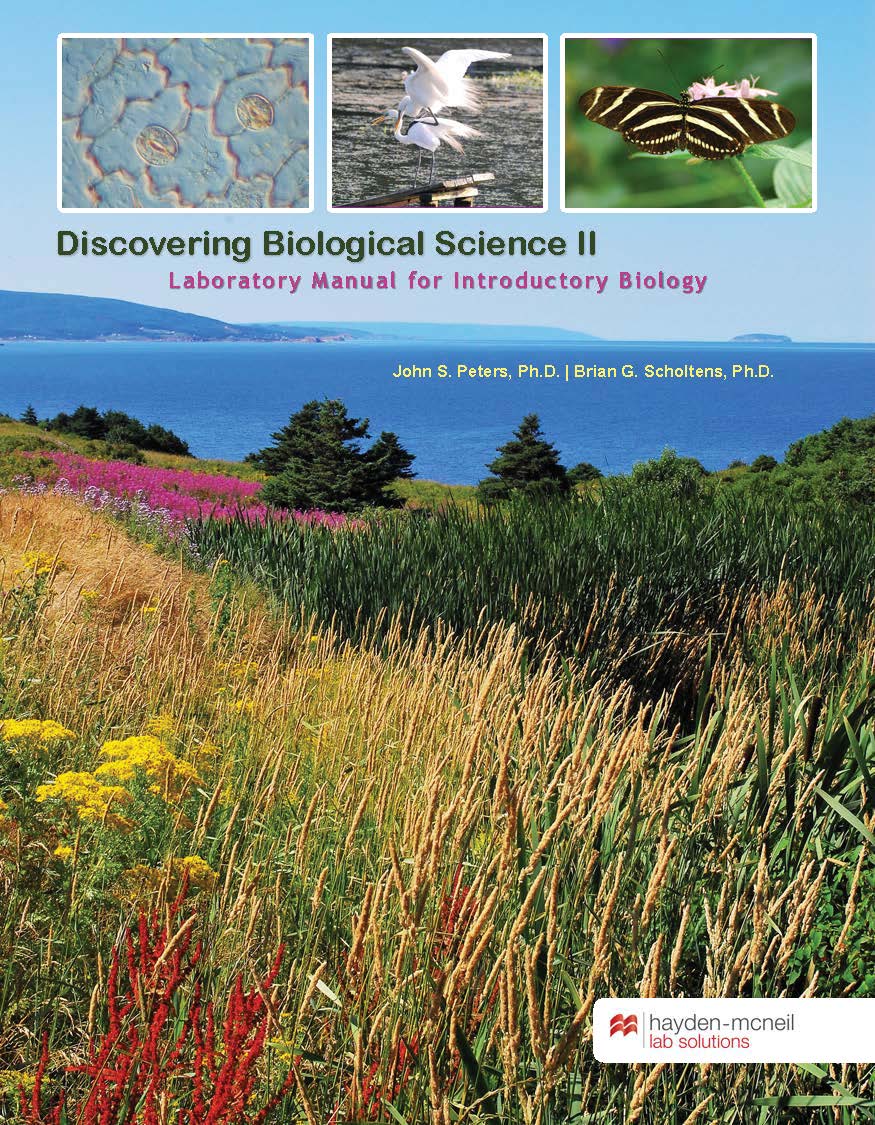 |
Discovering Biological Science - Inquiry-based Laboratories for Introductory Biology
The Discovering Biological
Science labs, developed by Dr. John Peters and Dr.
Brian Scholtens weave together a series of labs
which explore important introductory biology
concepts, while providing students with experiences
that lead them to understand and appreciate the
collaborative, creative and dynamic nature of
science. There are two different introductory
biology lab manuals that can be adopted as is, or
instructors can select individual labs for building
a customized lab solution. The series of
inquiry-based biology labs are suitable for both
majors and non-majors courses and are available for
preview and adoption through Hayden-McNeil
of Macmillan Learning. Feel
free to contact the author John Peters, Ph.D. (petersj@cofc.edu)
if you have questions.
|
 |
The Helping Puzzle - A interactive activity which can be used to help students, SI Leaders, and faculty experience the benefits of collaborative learning. Groups in Action - Video vignettes for triggering group discussion. From the University of Delaware's - Problem Based Learning Team-based Learning - This site has articles,references, videos, and webinars that will assist you with effective implementation of collaborative learning in the classroom. Several articles in the TBL bibliography by Larry Michaelson at this site are essential reads if you are new to collaborative learning. Peer Instruction - Education is more than just transfer of information, yet that is what is mostly done in large introductory courses - instructors present material (even though this material might be readily available in printed form) and for students the main purpose of lectures is to take down as many notes as they can. Few students have the ability, motivation, and discipline to synthesize all the information delivered to them. Yet synthesis is perhaps the most important - and most elusive - aspect of education. In this engaging seminar, Mazur shows how shifting the focus in lectures from delivering information to synthesizing information greatly improves the learning that takes place in the classroom. The Readiness Assurance Process (RAP) - These short quizzes, which I refer to as RATS (Readiness Assurance Tests), are short (5-10 minute) quizzes given at the beginning of the class period. The purpose of RATs is to 1) check student knowledge of biological concepts from the reading/research for that day's class; 2) give both the teacher and the student feedback on what was learned from the reading; 3) engender active/collaborative and critical discussion among students about biological concepts and their problem applications; 4) help the teacher determine what concepts from the reading students need help with during class. RAT's (or RAPs) are usually first taken individually, and then again in teams. Students receive both and individual grade and a team grade oneach RAT. More information on the theory and practice of the Readiness Assurance Process can be found in the article by Larry Michaelsen below.
Using class passports to form diverse teams Personal Response Systems
Clifton Strengths - This is an online instrument you can use to help students discover their natural talents; then teach them how to develop their talents into strengths, and coach them to apply their strengths. In collaborative learning, this instrument could be used to help students appreciate the diversity of strengths among teammates, an how to work together more effectively. |
Teaching Evaluation Resources |
Student Assessment of Learning Gains (SALG) - The newly revised version allows instructors to gather learning-focused feedback from students. The SALG survey asks students to rate how each component of a course (e.g., textbook, collaborative work, labs) helped them to learn, and to rate their gains toward achieving the course goals. The SALG survey can be customized to fit any college-level course, and can be administered multiple times per course. A baseline instrument allows faculty to compare gains relative to incoming student characteristics. Once registered on the new SALG site, you can:
Bioliteracy Project - Concept inventories in biology: "Our goal is to develop and distribute tools to assess whether students are learning what teachers think they are teaching." National Study of Education in Undergraduate Science College of Charleston General Education goals and the Natural Sciences or the AACU's General Education Goals - How well does your non-majors biology course meet these goals? |
Teaching Journals and Conferences |
Journals International Journal for the Scholarship of Teaching and Learning. Go to https://www.georgiasouthern.edu/ijsotl/email_notification.htm to receive email notification of new issues! CBE - Life Science Education - Affiliated with the American Society for Cell Biology Interdisciplinary Journal of Problem-based Learning. Go to https://docs.lib.purdue.edu/ijpbl/announcements.html to receive email notification of new issues! Southern Illinois University's Problem Based Learning Initiative - this site has an extensive bibliography on PBL research. Teaching Issues and Experiments in Ecology (TIEE) - a peer reviewed publication of ecological educational materials by the Ecological Society of America Upcoming Conferences & Workshops
|
Science Education Research &
Guides |
Active
learning increases student performance in science,
engineering, and mathematics. By Scott Freeman
et al. 2014. Proceedings of the National Academy
of Science, 111( 23):8410–8415 Evidence for the Efficacy of Student-Active Pedagogies - Assembled by Jeffrey E. Froyd Research Professor Director of Faculty and Organizational Development Texas A&M University (froyd@tamu.edu) Version: 5 August 2008 At MIT, Large Lectures are Going the Way of the Blackboard. by Sara Rimer. A recent article in the New York Times regarding MIT's switch to small, collaborative and inquiry-based introductory physics classes. Why Peer Discussion Improves Student Performance on In-Class Concept Questions. Science 2 January 2009:Vol. 323. no. 5910, pp. 122 - 124. - Research into the effect of peer-discussion on students' understanding of concepts. |
| Project Evaluation |
Thematic Maps of Focus Group Interviews - Problem-Based Learning (PBL) and Traditional Instructional Models in College General Education Biology: Student Perceptions about Learning Science. These maps summarize our findings from pre and post reform focus group interviews. Each map summarizes the project researcher's synthesis of student perceptions about learning that emerged from their course experience. SENCER Student Assessment of Learning Gains (SENCER SALG) - This web-based instrument is one of the instruments being used to assess students' views about how the course impacted their learning and and personal and civic engagement with science. Views on Science Technology and Society -(VOSTS) - A web-based and modified multiple response version of (VOSTS) - This instrument is also being used to assess students' views about the relationships between science and technology, the impact of science and technology on society, the nature of science, media vs.school presentations, and scientists' vs. the publics' role in socio-scientific decision making. |
 College of Charleston. Last
updated 9-13-2012. Questions and comments, email John S.
Peters, Ph.D, petersj@cofc.edu
College of Charleston. Last
updated 9-13-2012. Questions and comments, email John S.
Peters, Ph.D, petersj@cofc.edu